
How to Choose a Dining Table for Your Home: Size, Shape and Material Guide

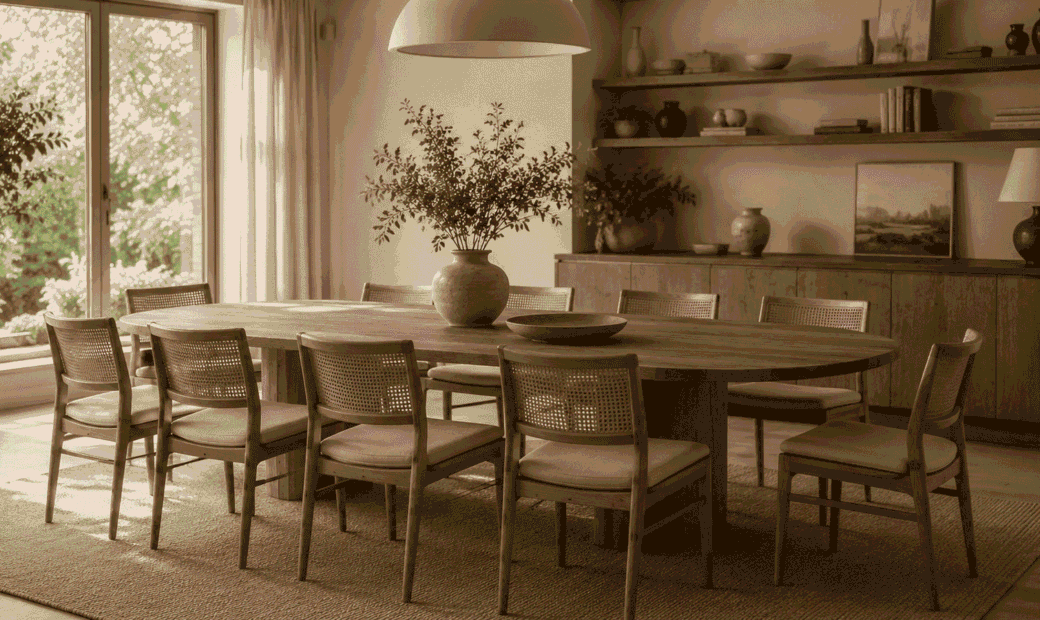
A dining table is more than a surface for serving meals. It often becomes a central part of everyday life, from family breakfasts and weekend dinners to children’s homework and gatherings with friends. Because it is used so frequently, choosing the right table requires more thought than simply selecting a design that looks attractive.
The right dining table should fit the room, accommodate the required number of people and work comfortably with the rest of the furniture. Material, shape, height, and construction also influence how practical the table will be over time.
Start With the Available Space
Before choosing a dining table, measure the area where it will be placed.
The table itself is only part of the space requirement. Chairs need room to move backwards, and people need enough clearance to walk around the dining area.
As a general starting point, around 90 cm of clearance between the table and nearby walls or furniture allows chairs to be pulled out comfortably. If people need to walk behind seated diners, additional space may be necessary.
This is especially important in apartments where the dining area may share space with the living room or kitchen.
How Many People Should the Table Seat?
The number of people who regularly use the table should influence its dimensions.
A useful planning guideline is to allow approximately 60 cm of table edge per person. A six-seater rectangular table may typically be around 160–180 cm long, while an eight-seater may require approximately 210–240 cm, depending on the design and seating arrangement.
However, these are only starting points. Chair width, table depth, leg placement, and the available room should also be considered.
A table designed specifically for the room can be adjusted when standard dimensions do not provide enough clearance.
Choose a Shape That Works With the Room
Different table shapes work better in different spaces.
Rectangular Tables
Rectangular dining tables are versatile and particularly suitable for longer dining areas. They can provide generous seating along the sides and work well against a wall when necessary.
Round Tables
Round tables can be useful in compact or square rooms. Without corners, they can make circulation around the table easier and create a more conversational seating arrangement.
Oval Tables
Oval tables combine some of the benefits of rectangular and round designs. They provide a longer seating area while reducing the sharp corners associated with rectangular tables.
Square Tables
Square tables can work well in rooms where there is similar clearance on all four sides. They can also create an intimate arrangement for smaller households.
The best shape is ultimately determined by the room’s dimensions and how people move through it.
Consider the Table Height
Most dining tables are designed around a standard height, but comfort also depends on the relationship between the table and the dining chairs.
The chair seat height, table apron, leg placement, and available knee room all affect the sitting experience.
If a dining table is being made to order, these elements can be considered together rather than treating the table and chairs as completely separate purchases.
Choosing the Right Material
The material has a significant impact on a dining table’s appearance, maintenance and longevity.
Solid wood remains a popular option for homeowners who want natural grain and a warm appearance. Different species can create very different visual results.
Teak is known for its stability and moisture resistance, while oak and ash can provide lighter tones and visible grain. Walnut tones can create a deeper and more formal appearance.
The choice should also take everyday use into account. A family dining table may require a finish that can withstand regular cleaning, spills and hot serving dishes.
Think About the Base Design
The table base should not be selected only for visual appeal.
Traditional four-leg designs are versatile, while trestle and pedestal bases can provide different visual characteristics and may create additional legroom depending on the design.
For larger tables, the position of the legs or pedestals can influence where chairs can be placed. This is why the base should be planned together with the tabletop and seating arrangement.
Custom Dining Tables for Unusual Spaces
Standard furniture dimensions work well when the room itself follows standard proportions. But many homes have awkward corners, structural columns, door swings, sideboards or unusually narrow dining areas.
In such situations, a custom dining table in Bangalore can be designed around the actual dimensions of the room.
The customization does not necessarily stop at size. Homeowners can consider the shape, wood species, finish, edge profile, base design and seating capacity as part of the same design.
For example, an oval tabletop may work better than a rectangular one when a doorway or walkway creates a tight corner. Similarly, a pedestal base may provide more usable legroom than conventional legs.
When an Extendable Table Makes Sense
An extendable dining table can be useful for households that have different everyday and entertaining requirements.
A smaller configuration can occupy less space during normal use, while an extension can provide additional seating when family or guests visit.
Before selecting an extendable design, check how much additional floor space will be required when the table is fully extended. The mechanism should also be considered for long-term usability.
What to Ask Before Ordering a Dining Table
Whether you are purchasing a ready-made table or commissioning a custom piece, ask about:
- Table dimensions and seating capacity
- Material and wood species
- Finish and maintenance requirements
- Edge profile
- Base construction
- Expected delivery timeline
- Whether the table can be customized
- Delivery and installation arrangements
If you are ordering a custom table, providing accurate room measurements and photographs can make the initial design discussion much more useful.
Finding Dining Tables in Bangalore
Homeowners looking for dining tables in Bangalore have a choice between ready-made furniture and made-to-order options.
Ready-made tables can be convenient when a standard size and design already suit the room. Custom furniture becomes more useful when the homeowner needs specific dimensions, materials or design details.
For example, All About Furniture creates made-to-order dining tables where customers can customize the length, width, height, shape, wood, base design, finish and edge profile. The company also considers circulation and chair clearance when designing tables for individual rooms.
You can explore their custom dining table collection if you are comparing made-to-order options in Bangalore.
Final Thoughts
Choosing a dining table is ultimately about finding the right balance between design and everyday practicality.
Start with the room measurements, determine the required seating capacity and choose a shape that allows people to move comfortably. Then consider the material, finish, base design and maintenance requirements.
When standard furniture dimensions do not work for your space, customization can provide another option. A dining table designed around the room can make better use of available space while giving homeowners greater control over the final appearance and functionality.