
Aluminium Sliding Doors vs Swing Doors: Which Is Better for Your Home?

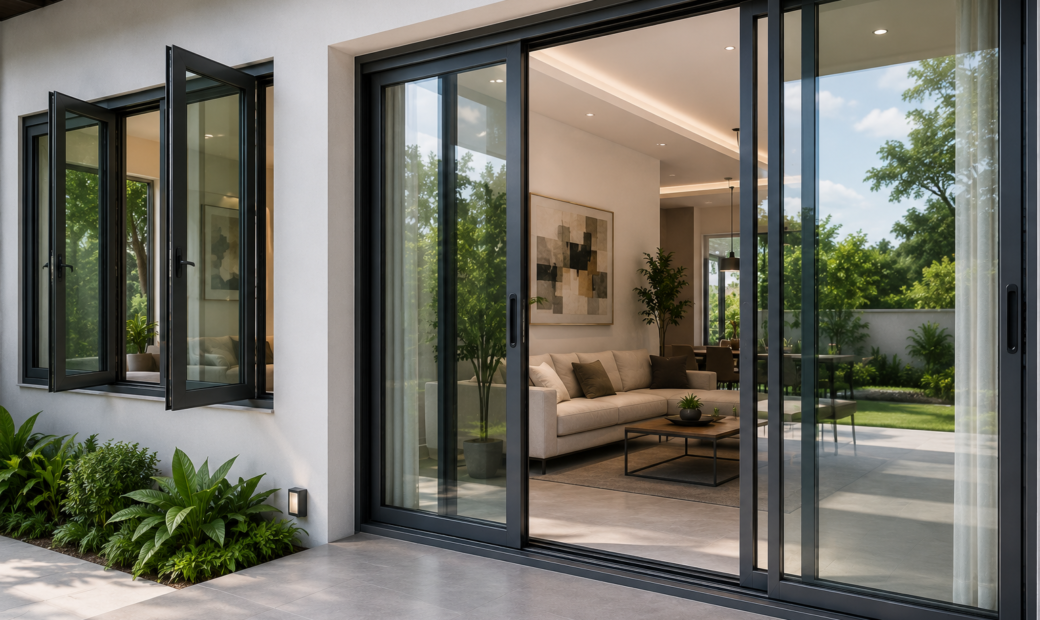
When choosing between sliding and swing doors, the right answer depends on your floor plan, lifestyle, and how much usable space you want to preserve. Sliding doors run along a track and require no swing clearance, making them ideal for compact layouts. Swing doors offer a classic look and simple operation but consume floor space when opening. For most Singapore homes, the decision comes down to room size, traffic flow, and aesthetics.
Why Door Type Matters More Than You Think
In Singapore, the average HDB flat ranges from 45 sqm to 110 sqm depending on flat type, according to HDB’s published data. Every square metre counts. The door you install directly affects how furniture is positioned, how naturally light flows through a room, and how comfortable daily movement feels inside the home.
Many homeowners focus on finishes and colours but overlook how door swing radius eats into functional floor space. A standard swing door typically needs 700mm to 900mm of clearance arc. In a smaller bedroom or toilet, that arc can block a wardrobe, restrict a vanity, or force awkward furniture placement.
Aluminium doors and windows in both sliding and swing configurations offer durability, low maintenance, and a sleek modern finish that suits Singapore’s tropical climate — but they serve different spatial needs.
Sliding Doors vs Swing Doors: A Side-by-Side Comparison
| Feature | Aluminium Sliding Doors | Aluminium Swing Doors |
|---|---|---|
| Floor Space Required | Minimal — slides along wall | Requires 700–900mm swing arc |
| Best For | Small rooms, patios, balconies | Entryways, larger rooms |
| Accessibility | Easier for elderly and wheelchair users | Standard use, may pose challenges |
| Ventilation | Wide opening, good airflow | Limited to door width |
| Aesthetics | Modern, seamless, open feel | Traditional, structured look |
| Maintenance | Track cleaning required | Hinges need occasional oiling |
| Soundproofing | Moderate | Slightly better seal |
| Cost | Moderate to higher | Generally lower |
When Sliding Doors Are the Smarter Choice
Space-Saving Doors for Compact HDB and Condo Layouts
Sliding doors are the go-to solution for space saving in smaller Singapore homes. Because the door panel travels horizontally along a wall-mounted or recessed track, there is zero swing clearance needed. This is especially valuable in HDB bedrooms, common toilets, and service yards where every centimetre of open floor matters.
For balcony or patio access in condominiums, a sliding door also creates a seamless visual connection between indoor and outdoor spaces. When fully opened, it lets in natural light and cross-ventilation — something Singapore’s warm, humid climate genuinely benefits from.
Accessibility and Elderly-Friendly Design
Singapore’s population is ageing. The Ministry of Health projects that 1 in 4 Singaporeans will be aged 65 or above by 2030. For homes where elderly family members or individuals with mobility needs reside, sliding doors remove a common physical barrier. There is no heavy door to push open against a tight space, no swing arc to navigate around, and the wide opening width makes movement easier.
HDB’s Enhancement for Active Seniors (EASE) programme also encourages home modifications that support ageing in place — sliding door installations in bathrooms and bedrooms align well with this philosophy.
Aesthetic Appeal for Modern Interiors
From a design perspective, sliding doors in aluminium frames give any room a clean, contemporary look. The slim profiles of modern aluminium systems mean more glass and less frame — maximising light and creating an open, airy atmosphere that many Singapore homeowners now prefer over bulkier traditional doors.
When Aluminium Swing Doors Make More Sense
Main Entrances and Formal Spaces
Aluminium swing doors remain the standard choice for main entrance doors in HDB flats and landed properties. They offer a solid, substantial feel and a tighter perimeter seal, which contributes to slightly better soundproofing and insulation. For a front door, this matters — both for security perception and noise reduction from common corridors or streets.
Rooms Where Wall Space Is Limited
Sliding doors need wall space to slide into. If the adjacent wall has a window, a built-in shelf, or a structural column, fitting a sliding door becomes complicated or even impossible without design compromises. In those cases, a well-positioned swing door — particularly one that opens outward — can be the more practical option.
Budget-Conscious Renovations
If you are working within a tighter renovation budget, swing doors generally cost less to supply and install than sliding door systems. The hardware is simpler, and the installation requires less precision in wall preparation. For secondary rooms where space saving is less critical, this trade-off can make financial sense.
Choosing the Right Aluminium Door for Each Room
- Master bedroom: Sliding doors maximise floor space and give a luxurious, hotel-like feel.
- Common toilet / bathroom: Sliding doors are ideal — they eliminate swing clearance issues in tight wet areas.
- Balcony / patio: Sliding doors are the default choice for visual connection and ventilation.
- Main entrance: Swing doors provide the solidity, security, and formal presence expected at a front door.
- Study or home office: Either works — choose based on wall availability and privacy preference.
- Service yard: Sliding doors handle tight utility spaces better than swing configurations.
Which Door Type Wins Overall?
For most Singapore HDB and condo homeowners, sliding doors deliver more practical value in the majority of rooms. The combination of space efficiency, modern aesthetics, and improved accessibility makes them a strong default — especially as homes become smaller and multi-generational living becomes more common.
That said, swing doors are not obsolete. They serve specific roles well, particularly at main entrances and in rooms where wall constraints rule out a sliding configuration. The best approach is a hybrid: sliding doors where space is tight or aesthetics are a priority, swing doors where structure, budget, or layout demands it.
If you are planning a renovation or new installation in Singapore, Vindar is a trusted provider of aluminium doors and windows with a product range covering sliding door systems designed for both HDB and condominium specifications. Explore their aluminium sliding door Singapore range to find the right fit for your home’s layout and style.
Frequently Asked Questions
Are sliding doors or swing doors better for small HDB rooms?
Sliding doors are better for small HDB rooms because they eliminate the 700–900mm swing arc that swing doors require, preserving usable floor space. This makes them ideal for bedrooms, bathrooms, and service yards where every square metre matters.
Do aluminium sliding doors require a lot of maintenance?
Aluminium sliding doors are low-maintenance but require occasional track cleaning to prevent dust and debris buildup, which can affect smooth operation. The aluminium frame itself resists rust and warping, making it well-suited to Singapore’s humid tropical climate.
Can sliding doors be installed on HDB flats in Singapore?
Yes, sliding doors can be installed in HDB flats. However, any structural or façade alterations must comply with HDB’s renovation guidelines. Internal sliding doors for bedrooms and bathrooms generally do not require special approval.
Are swing doors better for soundproofing than sliding doors?
Swing doors generally provide a slightly tighter perimeter seal, offering marginally better soundproofing than sliding doors. For spaces where noise control is a priority — such as a home office or master bedroom — a well-fitted swing door can be the better option.
What is the typical cost difference between aluminium sliding and swing doors in Singapore?
Aluminium swing doors are generally less expensive to supply and install than sliding door systems due to simpler hardware and easier installation. Sliding doors typically cost more because of the track mechanism and precise wall preparation required.
Which door type is more accessible for elderly residents?
Sliding doors are more accessible for elderly residents and individuals with mobility challenges. They require no force to push open against a swing arc, offer a wider clearance when open, and align with HDB’s EASE programme principles for age-friendly home design.