How Thread Plug Gauge Suppliers Help Improve Thread Measurement and Quality Control
Accurate internal thread inspection is essential in modern manufacturing. Small dimensional variations can affect fit, performance, and reliability. Thread plug gauges provide a practical way to verify whether an internal thread meets its specified requirements. Its effectiveness depends on gauge quality, calibration, guidance, and supplier support.
Thread Plug Gauge Suppliers play an important role by giving manufacturers access to suitable inspection tools for different thread standards and production needs. A dependable supplier does more than provide a gauge. It helps customers select the correct specification, maintain measurement consistency, and establish a reliable approach to quality control.
Understanding the Role of Thread Plug Gauges
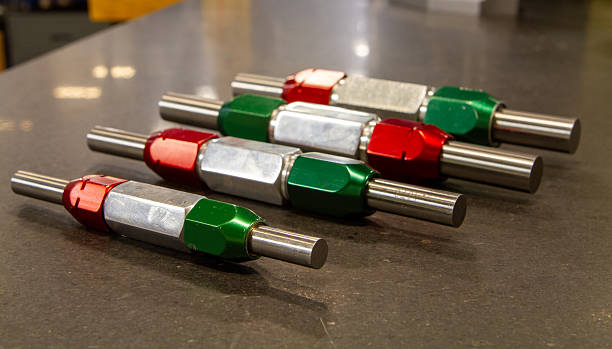
A thread plug gauge is designed to check the dimensional and functional condition of an internal threaded feature. GO and NO GO sections are commonly used to determine whether a thread is within the acceptable limits defined by the applicable specification. The GO portion should engage correctly through the required length, while the NO GO portion is intended to identify threads that are excessively large or otherwise outside the permitted tolerance.
This method provides quick feedback without requiring complex equipment for every component and is useful for high-volume inspection. When used correctly, plug gauges can help identify machining problems early and reduce the risk of defective components moving to later stages.
Choosing the Right Gauge
Selecting an appropriate gauge requires attention to more than thread size. Inspectors and purchasing teams should consider the thread standard, pitch, tolerance class, gauge type, material, working conditions, and inspection frequency. A mismatch between the gauge and the component specification can produce misleading results, even when the gauge itself has been manufactured accurately.
An experienced Thread Plug Gauge Manufacturer can support this selection process by understanding different thread systems and production requirements. Clear product information and technical assistance can also help users avoid mistakes when ordering gauges for specialized applications.
Quality and Calibration Matter
Measurement tools must remain reliable throughout their service life. Repeated contact with metal components can cause gradual wear, particularly in demanding production environments. If a gauge is worn or damaged, its inspection results may no longer represent the actual condition of the threaded component.
For this reason, manufacturers should consider calibration and verification as part of their quality management process. A reputable supplier should provide gauges manufactured to appropriate dimensional requirements and support calibration documentation when required. Regular inspection of the gauge itself can help detect wear before it affects production decisions.
Gaugestools, for example, focuses on precision inspection products designed for thread verification and industrial quality requirements. By combining suitable gauge specifications with quality assurance practices, suppliers can help manufacturers build greater confidence into their inspection routines.
Supporting Consistent Production
A dependable supplier can help businesses maintain consistency by supplying gauges that match established specifications and inspection procedures. When gauges are clearly identified and properly controlled, quality teams can reduce confusion and improve traceability.
Supplier Expertise and Technical Support
Supplier support should continue after delivery. Technical support can be valuable when a customer needs help understanding gauge specifications, selecting tolerances, or planning replacement and calibration schedules.
Experienced Thread Plug Gauge Suppliers can explain how different gauge configurations relate to particular thread requirements. This guidance is particularly useful for companies working with several standards or nonstandard applications. Responsive communication can also make it easier to resolve specification questions before they become purchasing or inspection problems. Good supplier communication can prevent costly inspection mistakes.
A knowledgeable Thread Plug Gauge Manufacturer can explain how different gauge configurations relate to particular thread requirements. This guidance is particularly useful for companies working with several standards or nonstandard applications. Responsive communication can also make it easier to resolve specification questions before they become purchasing or inspection problems.
Reducing Quality Risks
Thread failures are not always immediately visible. A component may appear acceptable externally while an internal thread has incorrect pitch, diameter, form, or depth. If such a defect reaches assembly, it can lead to poor fit, leakage, vibration, premature wear, or failure of the finished product.
Using an appropriate plug gauge provides a functional check that can reveal problems before assembly. However, operators should follow the applicable inspection procedure and avoid forcing gauges into threads. Proper cleaning, handling, storage, and periodic verification are also important for preserving gauge accuracy.
Gaugestools offers thread inspection solutions for manufacturers seeking dependable tools for these quality requirements. Establishing a controlled inspection process in which the gauge, procedure, operator, and calibration status work together provides broader value than simply having a measuring instrument available.
Building a Stronger Quality Control Strategy
Effective thread inspection should be part of a wider quality strategy rather than an isolated activity. Manufacturers can combine plug gauge inspection with process monitoring, dimensional checks, operator training, preventive maintenance, and documented calibration schedules. This approach helps identify both product defects and the production conditions that create them.
Choosing a dependable supplier can strengthen this strategy because the supplier becomes a resource for accurate inspection equipment and relevant technical information. Before selecting a supplier, businesses should review manufacturing capabilities, gauge specifications, quality assurance practices, calibration support, and technical communication.
Conclusion
Accurate internal thread inspection supports product reliability, production efficiency, and customer confidence. Thread plug gauges offer a straightforward method for checking whether internal threads meet defined requirements, but their value depends on correct selection, quality manufacturing, proper use, and ongoing calibration.
Working with a capable Thread Plug Gauge Manufacturer can make these elements easier to manage. A qualified Thread Plug Gauge Manufacturer can also support application-specific requirements. Gaugestools supports manufacturers with precision thread inspection solutions designed for consistent industrial applications. Businesses looking to improve their thread measurement process can contact us to discuss suitable gauge requirements and inspection needs.
FAQ
1. What is a thread plug gauge?
A thread plug gauge verifies the size, form, and functional condition of an internal threaded hole.
2. What are GO and NO GO gauges?
The GO gauge checks functional size, while the NO GO gauge helps identify threads outside the specified tolerance.
3. Why is calibration important?
Calibration confirms that an inspection gauge remains within required accuracy.
4. How often should thread plug gauges be checked?
The interval depends on usage, conditions, quality requirements, and the inspection program.
5. How should thread plug gauges be maintained?
Gauges should be cleaned, handled carefully, protected from damage and corrosion, stored properly, and periodically calibrated.