Virtual Shoe Try-On: A New Way for Footwear Brands to Sell Online

Shoes are more than everyday essentials. They reflect personality, complement outfits, and help people express their individual style. From everyday sneakers to formal shoes and statement heels, shoppers often compare several designs before deciding which pair to buy.
But online footwear shopping has a limitation. Customers can browse hundreds of products, yet they may struggle to understand how a shoe will look when worn. Traditional product photographs show the design, but they don’t always provide the interactive experience shoppers want.
For footwear brands and online retailers, virtual shoe try-on offers a new way to make digital shopping more engaging. By combining virtual previews with interactive product visualization, businesses can help customers explore footwear beyond conventional product images.
Why Online Shoe Shopping Needs a Better Experience
Imagine finding a pair of sneakers that looks perfect in an advertisement. You open the product page, check the photographs, and read the description. Still, you may wonder whether the design matches your personal style or whether another color would look better.
This uncertainty can make online shopping less satisfying.
Traditional footwear catalogs depend heavily on static photographs. Although high-quality images are important, shoppers often need to switch between multiple views to understand a shoe’s shape, sole, material, and overall design.
An interactive shopping experience gives customers another way to explore these details. Instead of simply scrolling through products, they can engage with the designs and make comparisons before deciding what to buy.
What Is Virtual Shoe Try-On?
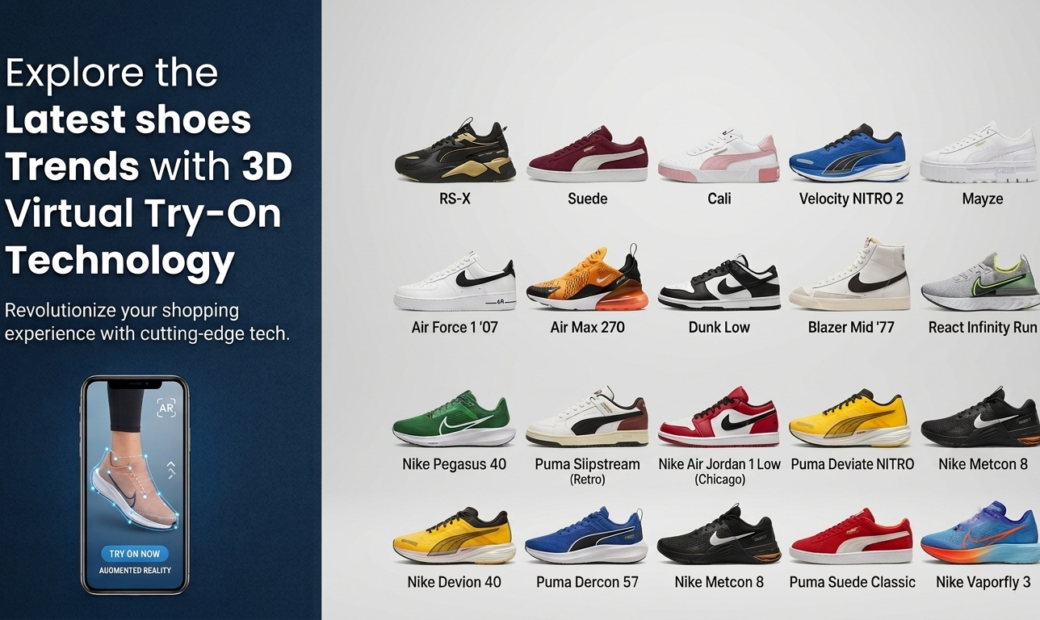
Virtual shoe try-on uses digital technology to help shoppers visualize footwear before purchasing. Depending on the solution, customers may preview shoes on their feet through a compatible camera experience or explore interactive digital models of individual products.
The objective is to make online product discovery more visual and personal.
For example, a shopper browsing casual sneakers might compare several designs and use a supported virtual try-on feature to preview their appearance. Someone shopping for formal footwear could explore different styles before narrowing down their choices.
Virtual try-on is different from a 3D product viewer. A try-on experience focuses on how footwear may appear when worn, while a 3D viewer allows shoppers to examine the shoe itself from different angles. When combined, these tools can provide a richer product exploration experience.
Move Beyond Flat Images with Interactive 3D Shoe Catalogs
For footwear brands, product presentation can make a meaningful difference in how customers explore an online collection.
A standard product photograph may show the front of a sneaker, but what about the sole, heel, stitching, or side profile? Interactive 3D visualization can help shoppers inspect these features by rotating a digital model and viewing it from multiple angles.
This approach can be particularly useful for brands selling products with distinctive design elements.
A sneaker brand might highlight its sole pattern and layered construction. A premium footwear retailer could showcase the finish and shape of a formal shoe. A fashion label could make it easier for customers to compare different colors and silhouettes.
By giving shoppers greater control over product viewing, brands can create a more engaging alternative to browsing static image galleries.
How Virtual Try-On Can Help Footwear Brands Engage Customers
Customer engagement is about more than attracting clicks. It is about giving shoppers useful reasons to explore a product and continue interacting with a brand.
Virtual shoe try-on can introduce an element of personalization into the buying journey. Rather than viewing the same product photographs as every other visitor, shoppers may be able to preview selected footwear through a compatible digital experience.
This can make browsing feel more interactive and encourage customers to explore additional designs.
For retailers with large collections, virtual previews may also help shoppers compare options more easily. Instead of relying entirely on imagination, they gain another visual reference when deciding which products interest them.
The experience should remain simple, however. Try-on features need to load efficiently, work well on supported devices, and complement the existing product page rather than complicate it.
Can Virtual Shoe Try-On Support Online Sales?
Footwear retailers compete not only on price and product quality but also on the experience they provide customers.
When shoppers find it difficult to evaluate products, they may postpone their decisions or look for alternatives. Better product visualization can help address some of this uncertainty by providing more information about a shoe’s appearance.
Virtual try-on and 3D product viewing can support this process by helping customers explore designs, compare options, and interact with the catalog.
For brands, potential benefits include:
- More engaging product pages.
- Better visibility for footwear design details.
- More interactive product discovery.
- Additional opportunities to compare styles.
- A more personalized online shopping journey.
These features can support conversion efforts, but they do not automatically guarantee increased sales. Retailers should monitor product engagement, conversion rates, customer feedback, and return reasons to understand their actual impact.
What Footwear Retailers Should Consider Before Adopting Virtual Try-On
Introducing virtual try-on technology requires careful planning. Brands should choose a solution that suits their product catalog, e-commerce platform, and customers’ shopping habits.
Start by evaluating the accuracy of the digital footwear models. Colors, proportions, textures, and visible details should closely represent the actual products.
Next, consider mobile compatibility and website performance. Shoppers should be able to access the experience without unnecessary downloads or complicated steps, wherever the selected solution supports browser-based use.
Finally, make sure product information remains clear. Virtual visualization can help shoppers understand appearance, but it cannot independently guarantee correct shoe size, comfort, or fit. Accurate size charts, material descriptions, and return policies are still essential.
Make Online Footwear Shopping More Interactive with Camweara
Footwear brands looking to explore virtual product experiences can learn more about virtual shoe try-on.
Virtual try-on technology can help brands rethink how customers interact with their online collections. When combined with detailed product visualization and useful product information, it creates another opportunity to make footwear discovery more engaging.
The right approach depends on the features available, the quality of the digital models, and how effectively the technology fits into the customer journey.