
ISO 9001 Lead Auditor Course: Understanding Where It Fits in the Quality Standards Family

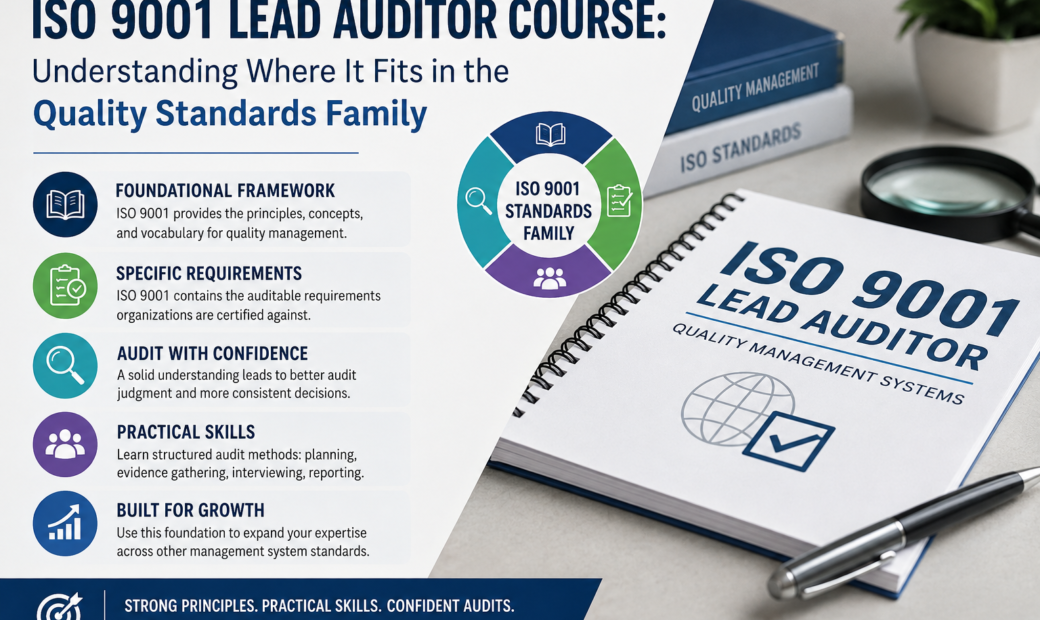
Professionals researching audit training often come across references to both ISO 9001 and ISO 9001, and the overlap between the two terms can create genuine confusion about what each one actually covers. Understanding this relationship helps clarify exactly what an iso 9001 lead auditor course involves and how it connects to the broader quality management landscape.
This guide clears up that confusion, explaining how ISO 9001 fits within the wider family of quality standards and what that means for anyone considering formal audit training.
Understanding the ISO 9001 Family of Standards
ISO 9001 as a Foundational Framework
ISO 9001 refers to the broader family of quality management standards, establishing the fundamental principles, vocabulary, and concepts that the more specific requirements documents, including ISO 9001, are built upon.
How This Differs From ISO 9001 Specifically
While ISO 9001 provides foundational vocabulary and principles, ISO 9001 contains the specific, auditable requirements that organizations are actually certified against, making the two documents complementary rather than interchangeable.
Why This Distinction Matters for Training
Building a Complete Conceptual Foundation
Understanding the foundational principles behind quality management, not just the specific requirements auditors check against, gives participants a deeper, more flexible understanding that improves their overall audit judgment.
Avoiding Common Terminology Confusion
Training that clarifies this relationship early helps participants avoid confusion later, particularly when documentation or discussions reference the broader standards family alongside specific certifiable requirements.
How Training Typically Progresses
Starting With Conceptual Grounding
Programs grounded in this broader framework typically begin by establishing conceptual understanding before moving into more specific, applied audit techniques, giving participants a solid base to build on.
Moving Toward Applied Practice
Once foundational concepts are established, training shifts toward practical application through case studies and exercises, allowing participants to see how abstract principles translate into real audit judgment.
How This Fits Into a Broader Learning Journey
Treating This as a Starting Point, Not an End Point
Many professionals view this foundational training as the beginning of a longer learning journey, building toward more advanced or specialized audit expertise as their careers progress.
Layering Additional Certifications over Time
Once this foundation is established, some professionals go on to pursue training related to other specific management system standards, applying the same foundational thinking to new, related contexts.
Common Misconceptions worth Addressing
Assuming ISO 9001 and ISO 9001 Are Interchangeable Terms
While closely related, these terms refer to different documents within the same family, and understanding this distinction helps avoid confusion in both training and later professional discussions.
Assuming Foundational Training Is Less Practical
Some assume that training grounded in foundational principles is less hands-on than requirement-specific training, but strong programs combine both conceptual grounding and genuinely practical exercises.
What This Training Typically Covers
Core Quality Management Principles
Training grounded in the ISO 9001 family typically covers foundational principles like customer focus, process approach, and continual improvement, which underpin how auditors evaluate any quality management system.
Structured Audit Methodology
Beyond foundational concepts, strong programs teach the practical mechanics of auditing: planning, evidence gathering, interviewing, and reporting, applying these foundational principles in a genuinely structured way.
Common Vocabulary Used Across Quality Management
Learning the standardized vocabulary established within this framework helps auditors communicate clearly and consistently, both with colleagues and with the organizations they’re auditing.
Building genuine understanding through an iso 9001 lead auditor course gives participants both the conceptual foundation and practical audit skills needed to evaluate quality management systems with real confidence and precision.
Practical Tips for Getting the Most from This Training
Approaching Foundational Sessions with Patience
Taking time to genuinely absorb foundational concepts, rather than rushing toward practical exercises, tends to pay off through stronger judgment during the more applied portions of training.
Connecting Concepts to Your Own Workplace
Actively thinking about how foundational principles apply to processes in your own organization helps make abstract concepts feel considerably more concrete and relevant.
Who Benefits From Understanding This Foundation
Professionals New to Quality Management
Those newer to the field benefit significantly from understanding foundational concepts before diving into specific requirements, since this context makes later, more detailed learning considerably easier to absorb.
Experienced Auditors Deepening Their Understanding
Even experienced professionals sometimes benefit from revisiting foundational principles, as this deeper understanding can improve the quality and nuance of their audit judgment in more ambiguous situations.
Why Employers Recognize the Value of This Foundation
Signaling Genuine Depth of Understanding
Professionals who understand both foundational principles and specific requirements tend to bring more nuanced, thoughtful judgment to their work, a quality employers consistently value in audit and quality roles.
Supporting More Consistent Decision-Making
A solid grasp of underlying principles helps professionals make more consistent decisions when facing situations that fall outside straightforward, clearly defined scenarios.
Common Questions about This Training
How Does This Training Differ From Standard ISO 9001 Auditor Training?
The core audit skills taught are largely consistent, though training grounded explicitly in the broader standards family may spend more time on foundational principles and vocabulary before moving into specific requirements.
Does Understanding ISO 9001 Improve Practical Audit Skills?
Yes. A solid grasp of foundational principles tends to improve an auditor’s judgment in ambiguous situations, where understanding the underlying intent behind a requirement matters as much as the literal wording.
Is This Training Relevant for Someone Focused Specifically on Certification Audits?
Yes. Even auditors focused specifically on certification work benefit from understanding the broader conceptual foundation, since it supports more consistent, well-reasoned judgment throughout the audit process.
How Long Does It Typically Take to Build This Foundational Understanding?
Most participants grasp foundational concepts within the earlier sessions of training, though genuine fluency tends to deepen further as these concepts are applied throughout the more practical portions of the course.
Building on This Foundation
Applying Foundational Concepts in Practical Situations
Looking for opportunities to apply foundational quality management principles in everyday work, not just formal audits, helps reinforce learning and demonstrates genuine understanding beyond memorized requirements.
Continuing to Build Specific Audit Expertise
Using this foundational understanding as a starting point for continued learning, including more specific and advanced audit training over time, helps build a genuinely well-rounded professional skill set.
Bringing It All Together
Understanding how ISO 9001 fits within the broader quality standards family gives professionals a stronger, more flexible foundation for their audit work. This clarity, combined with practical audit skill-building, tends to produce more confident, well-rounded auditors who can navigate both foundational principles and specific certifiable requirements with genuine ease, setting them up well for long-term success in quality-focused roles.