
Trailer Coupling Safety Tips Every Camper Owner Should Follow

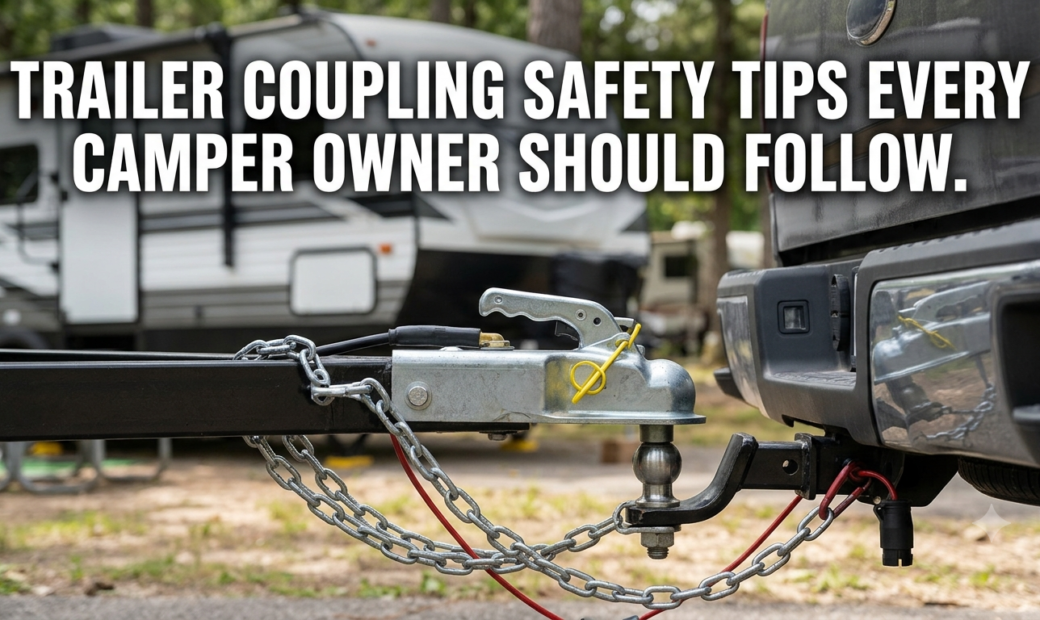
Towing a camper is a great way to see new places. But the trip is only as safe as the link between your car and your trailer. That link is the coupling.
If the coupling fails, the trailer can come loose on the road. That is dangerous for you and for everyone around you. This guide explains how a camper trailer coupling works and gives simple safety tips to follow before and during every trip.
What Is a Trailer Coupling?
A trailer coupling joins your trailer to your tow vehicle. It holds the two together and lets the trailer turn and move over bumps.
There are two main parts:
- The hitch or tow ball on the vehicle
- The coupler on the front of the trailer
The coupler sits over the ball and locks in place. Together they carry the weight and pull of the whole camper.
Common Types of Trailer Couplings
Not all trailer couplings are the same. The right type depends on your camper and your vehicle.
Ball Couplings
These are the most common. A round ball on the vehicle fits into a cup shaped coupler on the trailer. They are simple and work well for small and medium campers.
Pintle Hook Couplings
These use a hook and a ring. They are strong and often used for heavy loads or rough ground. They are less common on regular camper trailers.
Fifth Wheel and Gooseneck Couplings
These mount in the bed of a pickup truck. They are used for large campers and carry weight over the truck’s rear axle. They tend to feel steadier on the road.
Off Road Couplings
Some campers use special couplings that allow extra movement. These help the trailer handle rough tracks without strain.
Know Your Weight Limits
Every coupling has a weight rating. Going over it is one of the biggest causes of trouble.
You should know these numbers:
- The towing capacity of your vehicle
- The rating of your tow ball and coupler
- The gross weight of your loaded camper
- The tongue weight, which is the downward push on the ball
The lowest rating in the chain is your real limit. If your ball is rated lower than your trailer, the ball sets the limit. Check the labels. They are usually stamped on the parts or printed on a plate.
Check the Ball Size
The tow ball and the coupler must match. Common ball sizes include 50 mm, 2 inch and 1 7/8 inch. Using the wrong size can let the trailer jump off the ball.
The size is often printed on the coupler. It is also stamped on the ball. Check both before you hook up. If you are not sure, ask a trailer shop.
Inspect Before Every Trip
A quick check can prevent a big problem. Do this each time you tow, not just on long trips.
Look closely at these parts:
- The tow ball for cracks, rust or flat spots
- The coupler for wear or damage
- The latch and locking pin
- Bolts and nuts for tightness
- The frame near the coupling for cracks
If anything looks bent, worn or loose, fix it before you go. Do not hope it will hold.
Hook Up the Right Way
Hooking up correctly takes a few minutes. Do it slowly and follow the same steps each time.
- Back the vehicle close to the trailer
- Lower the coupler onto the ball
- Close the latch fully
- Insert the safety pin or lock
- Raise the jockey wheel
- Tug upward on the coupler to test it
Never skip the tug test. If the coupler lifts off the ball, it is not locked on.
Use Safety Chains or Breakaway Cables
Safety chains are a backup. If the coupling fails, the chains help keep the trailer attached to the vehicle.
Cross the chains under the coupler in an X shape. This forms a cradle that can catch the tongue if it drops. Leave enough slack for turns, but not so much that they drag on the road.
Many campers also have a breakaway cable. It applies the trailer brakes if the trailer separates. Make sure it is clipped to the vehicle, not to the hitch itself.
Connect Lights and Brakes
A coupling is not only about the physical link. The electrical plug must also be connected.
Plug in the trailer lights and test them. Check the brake lights, indicators and tail lights. Ask someone to stand behind while you press the brake and signal.
If your camper has electric brakes, test the brake controller too. Good brakes make a big difference in an emergency.
Balance Your Load
How you pack the camper affects the coupling. A poorly loaded trailer can sway or put too much pressure on the ball.
Try these tips:
- Put heavy items low and over or just ahead of the axle
- Do not stack too much weight at the back
- Keep the load even from left to right
- Secure everything so it cannot shift
A good guide is to aim for about 10 percent of trailer weight as tongue weight. Too little can cause sway. Too much can overload the hitch.
Keep the Coupling Clean and Greased
Dirt and rust wear out couplings. A little care helps them last longer.
- Wipe off dirt and old grease from the ball and coupler
- Add a thin coat of grease to the ball when the maker suggests it
- Apply light oil to the latch and moving parts
- Use a cover on the coupler when stored
Do not grease the ball if the manual says not to. Some couplings with stabilizer devices work best with a dry ball. Check your guide.
Drive With Extra Care
Towing feels different from normal driving. The vehicle is heavier and longer. It takes more space to stop and turn.
Keep these habits in mind:
- Drive slower than usual
- Leave extra room behind other vehicles
- Take wide turns
- Brake early and smoothly
- Avoid sudden moves with the wheel
Wind and passing trucks can push a trailer around. If it starts to sway, ease off the gas and do not slam the brakes. Hold the wheel steady and slow down.
Check During the Trip
Do not assume everything stays tight. Vibration can loosen parts.
Stop after the first few kilometres and check the coupling again. Then check at each rest stop. Look at the latch, chains, plugs and tyres.
This only takes a minute and can catch a problem early.
Reversing and Parking
Parking a camper can put a lot of stress on the coupling. Go slowly and use a spotter if you can.
When parked, chock the wheels. Put the jockey wheel down and use stabilizer legs if you have them. Do not unhook on a slope without chocking the wheels first.
Store the Coupling Properly
When the camper is not in use, protect the coupling. Lock it with a coupling lock to prevent theft. Keep it dry and covered if you can.
Before the next trip, give it a full inspection. Storage can bring rust, stiff parts or hidden damage.
When to Replace Parts
Parts do not last forever. Replace them when you see:
- Deep rust or cracks
- A ball worn into an uneven shape
- A latch that does not close tight
- Bent or stretched safety chains
- Parts that have been in an accident
Always use parts that match the weight rating of your setup. Cheap or unmarked parts can fail.
Know the Rules
Towing laws differ from place to place. They cover things like weight limits, lights, mirrors and safety chains. Check the rules where you live and where you plan to travel. This helps you stay legal and safe.
Final Thoughts
A good trailer coupling is the heart of safe towing. Know your weight limits, match the ball size and check every part before each trip. Use safety chains, test your lights and drive with care.
These steps do not take long. But they can save you from stress, damage and danger. With a little care, your camper trips can be safe and fun.