DTF Printing: A Game-Changing Technology for Modern Businesses
Custom apparel has changed considerably over the past few years. Customers no longer want only standard designs produced in large quantities; they increasingly look for personalized garments, short-run collections, branded workwear, event merchandise, and one-off products. That shift has pushed print businesses to look for production methods that can handle variety without making every order complicated.
For entrepreneurs entering the market, entry-level DTF printer models can provide a practical starting point. They allow smaller businesses to explore custom apparel production without immediately committing to a large industrial setup. The important part is choosing equipment that matches the type and volume of work a business actually expects to handle.
Why DTF Printing Has Changed Apparel Production
Traditional screen printing remains useful, particularly when a business produces large quantities of the same design. But preparing screens, separating colors, and setting up a job can become inconvenient when customers want ten different designs in small quantities.
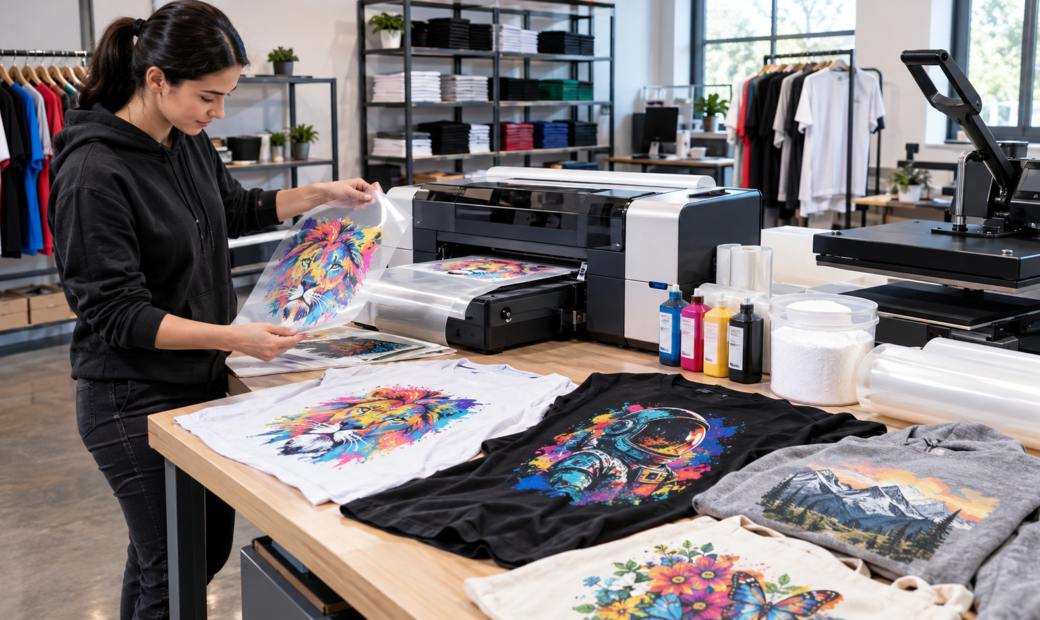
Direct-to-film printing approaches the problem differently. Artwork is printed onto a special film, coated with adhesive powder, cured, and then transferred onto the garment with a heat press. The process makes it easier to move between different designs without preparing a new screen for every job.
That flexibility matters for small clothing brands and custom-order businesses. A customer might order five shirts with one design today and return next week with an entirely different artwork. The production workflow can accommodate that change without the same setup burden associated with conventional methods.
What Makes the Technology Attractive to Businesses?
One reason businesses are exploring DTF Printers is their ability to support a broad range of apparel applications. Depending on the equipment, ink, film, and garment being used, businesses can produce detailed graphics on materials such as cotton, polyester, blends, and other commonly decorated textiles.
The technology can also be useful when a business needs:
- Full-color artwork
- Detailed graphics
- Small production runs
- Personalized orders
- Multiple designs within one production schedule
- On-demand apparel
This doesn’t mean the technology is automatically the right choice for every company. Production volume, available workspace, budget, maintenance requirements, and customer demand should all be considered before purchasing equipment.
Choosing Equipment Based on Your Real Production Needs
A common mistake is choosing a machine simply because its specifications look impressive. A better approach is to work backward from the business.
Start by estimating the number of garments you expect to produce each week. Then consider the type of artwork you will print, the available workspace, and how much time you can dedicate to production and maintenance.
A small startup may have different requirements from an established print shop processing hundreds of orders. Buying equipment that is significantly larger than necessary can tie up capital, while choosing a machine that is too small can create bottlenecks as orders increase.
Don’t Ignore the Supporting Equipment
The printer itself is only one part of the workflow. A functioning production setup may also require transfer film, adhesive powder, curing equipment, a heat press, compatible inks, RIP software, and appropriate maintenance supplies.
A reliable workflow depends on these components working together. Poor-quality consumables or unsuitable settings can affect adhesion, color appearance, and durability even when the printer itself is capable of producing good results.
Artwork and Color Management Matter
Good equipment cannot compensate for poorly prepared artwork. Before printing, files should be checked for resolution, transparency, sizing, and other requirements appropriate to the production workflow.
Color management is another area worth learning. What appears on a computer monitor may not reproduce exactly on a finished garment. Proper software settings, suitable color profiles, and consistent production conditions can help reduce unexpected differences between the design and final product.
For businesses producing customer orders, creating a repeatable process is particularly important. Customers generally expect the same design to look consistent when they reorder it months later.
Maintenance Should Be Part of the Business Plan
Maintenance is sometimes treated as an inconvenience rather than a normal operating cost. That approach can become expensive.
Regular cleaning, correct storage of consumables, appropriate operating conditions, and routine inspection can help prevent avoidable production problems. White ink, in particular, requires careful handling because its pigment can settle when equipment is not maintained properly.
Businesses should also consider access to technical support and replacement components before buying equipment. A machine sitting unused because a critical part is unavailable can affect delivery schedules and customer relationships.
Where DTF Fits Into a Modern Business
The technology is particularly interesting for businesses built around customization. A clothing startup can test new designs without ordering a large inventory. A local company can produce branded shirts for a small event. A sports organization can order personalized garments without committing to thousands of pieces.
It can also complement an existing printing operation. Some businesses use different technologies for different types of work rather than expecting one method to handle every order.
This approach makes sense because printing technologies have different strengths. Screen printing can remain efficient for certain high-volume jobs, while direct-to-film processes can provide flexibility for varied, smaller orders.
Building a Business Around the Technology
Buying equipment does not automatically create a successful apparel business. The commercial side deserves just as much attention as production.
Before investing, identify who you want to sell to. Local businesses, schools, sports clubs, creators, event organizers, and small fashion brands can all have different requirements.
Then calculate your actual cost per garment. Include the blank apparel, film, powder, ink, electricity, packaging, labor, failed prints, maintenance, and shipping. This gives you a realistic foundation for setting prices.
Marketing should also show the finished product rather than focusing exclusively on the equipment. Customers generally care about how their shirts, hoodies, uniforms, or promotional products will look—not which machine produced them.
Why Supplier Support Matters
For a new operator, technical knowledge can be as valuable as the equipment itself. Training, onboarding, software guidance, maintenance information, and access to compatible supplies can make the learning process considerably easier.
DTGPRO operates within this digital apparel printing market, providing printing equipment and related solutions for businesses exploring professional production. Reviewing available equipment alongside the supporting supplies and services can help prospective buyers understand what a complete setup may involve.
Looking Beyond the Initial Purchase
The best equipment decision is not necessarily the machine with the lowest price or the highest advertised speed. It is the one that fits the business’s current requirements while leaving sensible room for growth.
Think about where the business could be six months or two years from now. Will order volumes increase? Will you add more garment types? Will you need additional operators? Could your workspace accommodate another production station?
These questions help turn an equipment purchase into a broader business decision rather than a simple transaction.
Final Thoughts
DTF printing has opened new possibilities for businesses that need flexibility, customization, and efficient short-run production. Its value comes not from replacing every other printing method, but from giving apparel businesses another practical way to respond to changing customer expectations.
For anyone considering this technology, the smartest starting point is careful research: understand your market, calculate your production costs, evaluate supporting equipment, learn the workflow, and choose a system that matches your expected workload. With that foundation in place, a DTF Printer can become part of a well-planned production operation rather than simply another piece of equipment in the workshop.
The author is an experienced digital marketing and content specialist with a strong interest in DTF printing, apparel production technology, and modern printing solutions. With a focus on practical industry insights, emerging technologies, and business-focused content, the author helps readers understand printing equipment, workflows, and market trends. Their work aims to provide clear, useful information for print businesses, entrepreneurs, and professionals exploring digital apparel printing.