Bonding Dissimilar Materials: How to Join Metal, Plastic, Glass and Ceramic Components Effectively

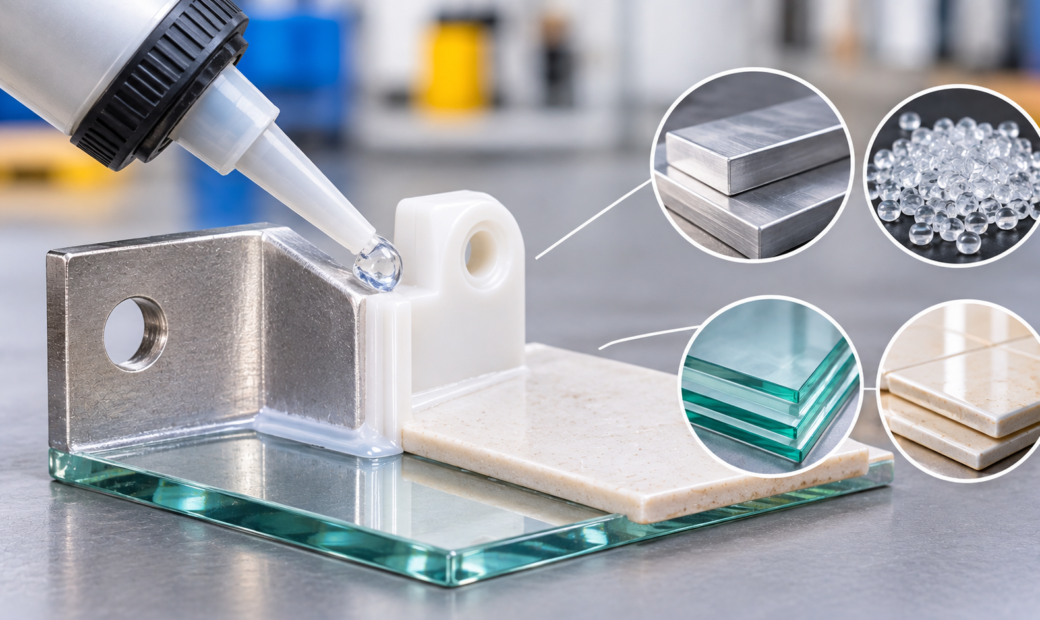
Modern products are rarely made from just one material. From electronic devices and automotive components to industrial machinery and household equipment, manufacturers often combine metals, plastics, glass, and ceramics to achieve the required strength, appearance, weight, and functionality.
However, joining different materials is not always straightforward. Each material has its own surface characteristics, thermal properties, and mechanical behaviour. Traditional fastening methods may not always be practical, particularly when components have complex shapes or require a clean, seamless finish.
This is where adhesive bonding becomes useful. With the right adhesive and preparation methods, different materials can be joined to create strong and reliable assemblies.
Why Is Bonding Different Materials Challenging?
Every material responds differently to bonding processes. Metals, for example, generally offer strong and stable surfaces, but they may contain oil, oxidation, or other contaminants that affect adhesion.
Plastics present a different challenge. Some have naturally low surface energy, making it difficult for adhesives to spread and form a strong bond. Others may soften or deform when exposed to certain chemicals or elevated temperatures.
Glass and ceramics have relatively hard surfaces, but their smooth finishes and brittle nature require careful consideration during bonding.
Another important factor is thermal expansion. When two different materials experience temperature changes, they may expand or contract at different rates. This can create stress within the adhesive joint over time.
Understanding these differences is the starting point for selecting an appropriate bonding solution.
1. Bonding Metal to Other Materials
Metal components are commonly combined with plastics, glass, ceramics, and other metals in industrial products.
For example, automotive manufacturers may use metal and plastic assemblies to reduce weight while maintaining structural performance. Electronic equipment may also contain metal housings joined to insulating components.
Before bonding metal surfaces, proper cleaning is essential. Oil, grease, dust, and oxidation can interfere with adhesion.
Depending on the application, mechanical abrasion or chemical surface treatment may also be necessary.
The adhesive should be selected according to the required load-bearing capacity, operating temperature, corrosion exposure, and expected service conditions.
2. Bonding Plastic Components
Plastic materials are used across industries because they are lightweight, versatile, and relatively easy to manufacture. However, not all plastics behave the same way when exposed to adhesives.
Materials such as ABS and polycarbonate may be easier to bond with certain adhesive systems, while polyethylene and polypropylene can be more challenging because of their low surface energy.
Surface treatment methods, including plasma treatment or other suitable processes, may help improve adhesion in difficult applications.
It is also important to check chemical compatibility. Some adhesives or cleaning agents may cause stress cracking or damage to sensitive plastic components.
Selecting a compatible adhesive and testing it on sample materials before production can help prevent unexpected failures.
3. Bonding Glass Components
Glass is commonly found in lighting equipment, electronic assemblies, optical products, and decorative applications.
Its smooth, non-porous surface makes proper cleaning particularly important. Fingerprints, dust, and moisture can interfere with the bonding process.
Glass is also a brittle material, which means that excessive stress around the joint can lead to cracking.
When bonding glass to metal or plastic, the adhesive should accommodate the differences in thermal expansion and mechanical behaviour between the materials.
The final selection will depend on factors such as transparency requirements, temperature exposure, moisture resistance, and the mechanical loads involved.
4. Bonding Ceramic Materials
Ceramics are valued for their hardness, electrical insulation, chemical resistance, and ability to withstand high temperatures.
They are used in electrical equipment, industrial machinery, medical instruments, and specialised engineering applications.
Despite these advantages, ceramics can be brittle and may have relatively smooth surfaces. This means the adhesive joint must be designed carefully to avoid excessive localised stress.
Surface cleaning and appropriate preparation can improve bonding consistency. The adhesive must also be compatible with the operating temperature and environmental conditions of the finished assembly.
Why Are Epoxy Adhesives Used for Multi-Material Bonding?
Epoxy adhesives are commonly considered for applications involving different materials because they offer a combination of mechanical strength, durability, and formulation flexibility.
Depending on the formulation, they can provide good adhesion to metals, certain plastics, glass, and ceramics.
They are also available in different systems designed for specific requirements, including room-temperature curing, heat curing, electrical insulation, and resistance to environmental exposure.
However, it is important to remember that no single epoxy adhesive works equally well with every material combination. Surface preparation, adhesive compatibility, and joint design remain essential.
Important Factors to Consider Before Bonding Different Materials
Before choosing an adhesive, manufacturers and engineers should evaluate several factors:
Material compatibility: Check whether the adhesive can bond effectively with both substrates.
Operating temperature: Consider the temperature range the assembly will experience during manufacturing and actual use.
Mechanical requirements: Understand whether the joint will experience tension, compression, shear, vibration, or repeated loading.
Surface preparation: Determine whether cleaning, abrasion, or specialised treatment is required.
Curing requirements: Check the recommended curing temperature, time, and mixing procedure.
Environmental exposure: Consider moisture, chemicals, oils, and other substances that may affect long-term performance.
Testing sample assemblies under realistic operating conditions is a useful way to evaluate whether the selected bonding system meets the application’s requirements.
Where Is Multi-Material Bonding Used?
Bonding dissimilar materials has applications across several industries.
In automotive manufacturing, adhesives help join metal and plastic components while supporting lightweight designs. In electronics, they are used to assemble housings, insulate components, and secure sensitive parts.
Aerospace applications may involve bonding metal structures with composite materials, while industrial equipment often combines metal, ceramic, and plastic components to achieve specific performance requirements.
The growing use of lightweight materials and complex product designs continues to make adhesive bonding an important part of modern manufacturing.
Final Thoughts
Joining different materials requires more than simply choosing a strong adhesive. Every substrate brings its own characteristics, and these must be considered before the bonding process begins.
Proper surface preparation, adhesive compatibility, joint design, and curing conditions all contribute to long-term performance.
By understanding how metals, plastics, glass, and ceramics behave, manufacturers can make better material and adhesive selections. A carefully planned bonding process can help create durable assemblies while offering greater flexibility in product design and manufacturing.