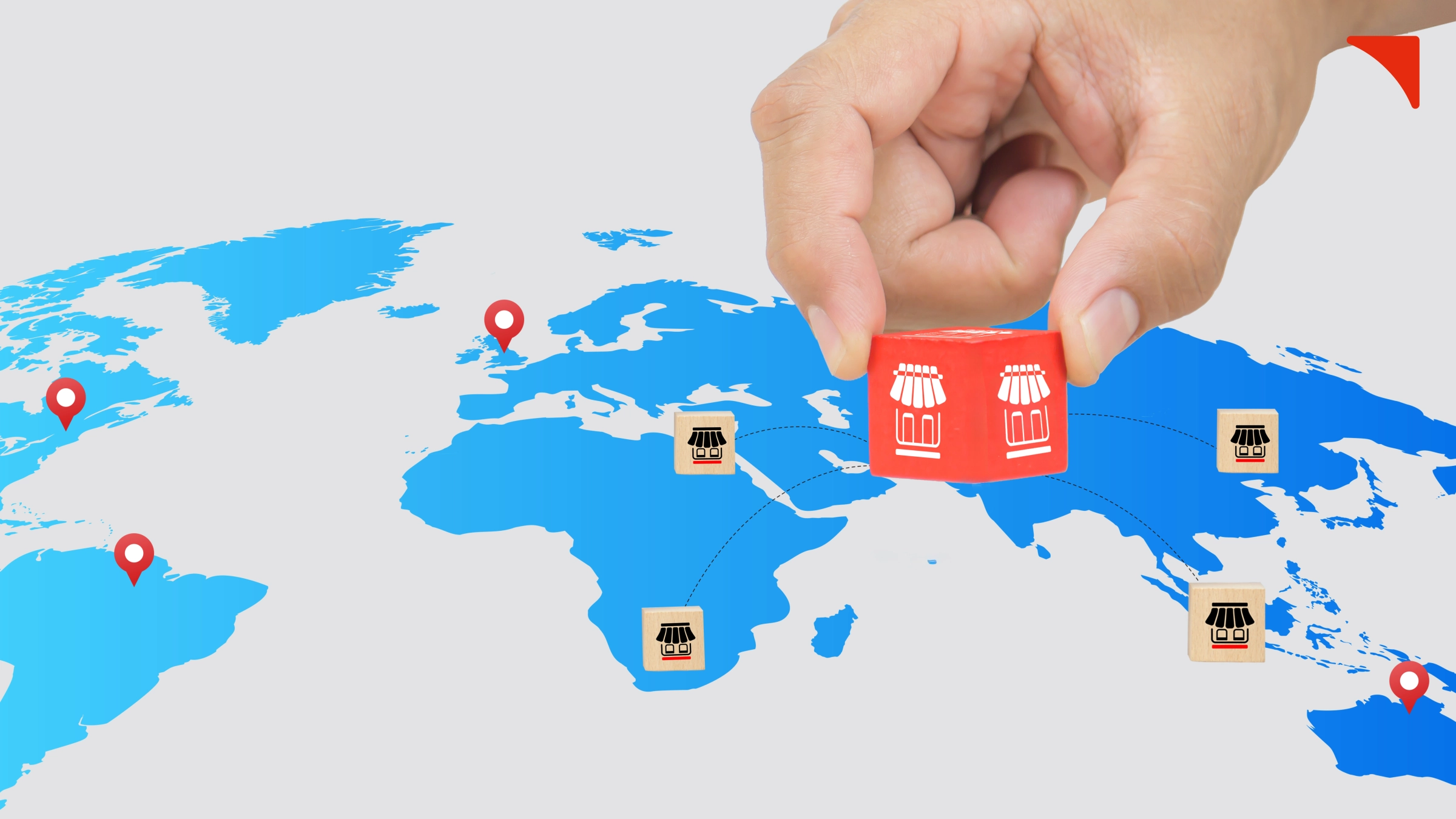
Why Every Successful GTM Plan Starts with Retail Market Research?

You’ve got a fantastic product and a proven concept. The logical next step is expansion, entering a new city, a new country, or a new demographic tier. The pressure is on to move quickly to capture potential market share.
But what if moving fast means moving wrong?
In the highly competitive world of retail, entering new markets without proper, localized research is the single most common cause of high failure rates. It leads to prime locations with disappointing footfall and perfectly designed stores that offer the wrong products at the wrong price.
Go-To-Market (GTM) success is not about speed, it’s about strategic precision. Before you sign a lease or mobilize a single contractor, you need hard, verifiable data to de-risk your investment. This is why expert retail market research must be the foundation of your entire Retail GTM plan.
Defining the Link Between Retail Market Research and GTM
A Retail GTM strategy outlines how your brand will execute its entry and compete successfully in a target market. It’s a complex, multi-layered blueprint covering,
- Site Selection: Where exactly should your stores be located?
- Customer Targeting: Who is the ideal shopper in this market?
- Pricing & Product Mix: What should you sell and at what price point?
- Positioning & Messaging: How should your brand be presented to resonate locally?
- Channel Mix: Should you prioritize standalone stores, shop-in-shops, or digital integration?
Retail market research is the engine that feeds every single one of these critical GTM decision points. It provides the empirical data that replaces assumptions with actionable certainty.
Without research, your GTM plan is a high-stakes gamble based on instinct. With research, it becomes a calculated, optimized strategy designed for predictable, scalable returns.
Difference Between Strategy and Speculation
When making Go-To-Market (GTM) decisions, it is important to comprehend the difference between strategy and speculation. Strategy is established on facts and research, speculation on guesswork. Market research gives the required information which changes hypothetical action into strategic action particularly in strategic decision areas of the GTM.
Site Selection
Market research, such as the demographics of the catchment area, traffic, and competitor concentration is critical to effective site selection. This understanding can also guide the brands to shun investing in locations with low traffic or those with the wrong orientation meaning that new locations should be strategically placed in areas that attract the appropriate customer base and provide reliable traffic.
Pricing Strategy
The data points required to formulate the pricing strategy of a brand are the local income levels, competitor pricing, the price elasticity of demand. With this understanding, companies can analyze prices that are conducive to local buying ability and also help to maintain the maximum profit margins and capture the market without causing a market turnover.
Product Assortment
The market research will provide useful knowledge regarding the local tastes, cultural inclination, and seasonal buying trends. The use of this data will assist brands to customize the product mix to the local demand which helps reduce excess stock and stock out. This results in efficiency and the maximisation of sales per square foot.
Brand Positioning
Brand positioning can be done more effectively and targeted through a keen knowledge of local psychographics, media consumption patterns and the attitude towards the existing brands. Through market research, messaging will be understood by the intended audience immediately, and the brand is likely to gain recognition in the new market faster.
What Retail Market Research Must Cover?
Effective retail market research is far more than pulling basic census data. It requires a holistic, three-dimensional view of the market you intend to enter. A strategic partner will execute deep dives into these core areas:
1. Consumer Insights and Behavioral Science
You need to understand more than just age and income. You need the “why.”
- Psychographics: What are the attitudes, values, and lifestyle choices that drive buying decisions in this region?
- Buying Behavior: Where do they shop currently? What are their barriers to entry for your category? What influences their purchase journey (social media, local influencers, traditional media)?
- Demand Mapping: How does demand for your product category shift seasonally, regionally, or by day of the week?
2. The Competitive Landscape and “Whitespace”
Before you commit, you must know who you are fighting and where the easy wins are.
- Existing Players: A detailed analysis of their physical footprint, customer service models, pricing tiers, and perceived brand equity.
- Category Saturation: Is the market already oversaturated? Where are the “whitespace” opportunities, gaps in the current offering that your brand is uniquely positioned to fill?
- Channel Analysis: Are competitors focusing primarily on digital or physical? This informs your optimal Retail GTM channel mix.
3. Location Feasibility and Catchment Analysis
This is where the rubber meets the road. Site selection is the biggest irreversible decision in a Retail GTM plan.
- Micro-Location Data: Analyzing traffic counts, co-tenancy with complementary brands, visibility, and accessibility (parking, public transport).
- Tier-2/3 Penetration Potential: For large-scale rollouts, understanding the viability of opening smaller-format stores in secondary and tertiary cities.
- Geodemographic Profiling: Linking the demographics of the area surrounding a specific proposed site to your ideal customer profile.
The Payoff of Market Research-Led GTM
When retail market research is leveraged by an expert partner, it doesn’t just prevent failure; it actively drives growth and superior business outcomes.
1. Better Accuracy in Targeting and Conversion
Data-driven insights allow you to customize your Retail GTM strategy. Your store design, visual merchandising, and local advertising are hyper-targeted, ensuring every person who walks in is highly likely to convert. This dramatically increases the sales performance of every square foot.
2. Optimized Investments with Reduced Risk
The most valuable service a research partner provides is risk mitigation. By proving the viability of a market or disproving the potential of a high-risk location, they save your brand millions in potentially misallocated capital. Every dollar spent on research saves ten or more in avoidable construction, inventory, and operational costs.
3. Stronger Brand Positioning and Faster Adoption
By realizing the competitive story, your brand can come to the market with messaging that responds instantly to a consumer need that the competition is failing to fulfill. This clear Retail GTM positioning is quicker in brand recognition and adoption and reduces valuable time to profitability.
Conclusion
Retail market research is only as accurate and strong as the quality of the retail market research that it is informed by. Expanding without insights supported by data is not bold in this day and age; it is reckless. You now have to deal with companies that are de-risking every single decision with granular data.
The scalable, profitable growth can only be attained by starting with the comprehensive, objective intelligence which is required to fully understand the market, client and the competitors.
Your investments worth millions of dollars are no longer to be made on pure intuition. Get an agency that integrates tactical market insights and design experience to develop your next winning GTM plan.